


Wall vignettes, three of my artifact and three from the creation story called the Golden Chain. I did all of them in the form of walls that could represent my story or that inspired me.
 In researching different ways to show scale figure drawing in other people's work, I stumbled upon the work of Matt Jones on the Urban Sketch Artists blog. He incorperates a couple different techniques in figure drawing to scale with the backgrounds, when people are closer he draws more detail to them, but when they are farther away there isn't even a distinguishing between male and female figures. It also conveys a sense of depth with the scale of the background architecture.
 Samantha Szaza also has an interesting way of presenting her figures, in the image above of a market scene she draws figures that are in the foreground with much detail and begins to fade the still detailed figures in the background out in the drawing like a vignette.
 I took an interest in Veronica Lawlor's work with figure drawing because of the signature splash of color she seems to add into her work that draws my eyes to the center of the page. The couple of examples of her work that I've seen are mostly large crowds of people depicted to show the scale of a large object like the New York City Christmas tree or a large are like a skating ring. Though its hard to distinguish all the figures in the background because its such a large crowd it gives is an abstract feeling in a real life drawing.
 James Hobbs is another example of another type of scale figure drawing, rather then draw the details of the people in the composition, he draws very basic figures that cannot be distinguished between male and female but give you a good notion of the scale of the image and the structures in the background.
 Greg Betza's scale figure drawing is more focused on the background work, mostly with architecture, the figures have basic shape to them and minor details like out line of clothes and hair. And just like Veronica Lawlor's work, he adds splashes of color to his, though his are more thought out to the light and shadow of the sketches.
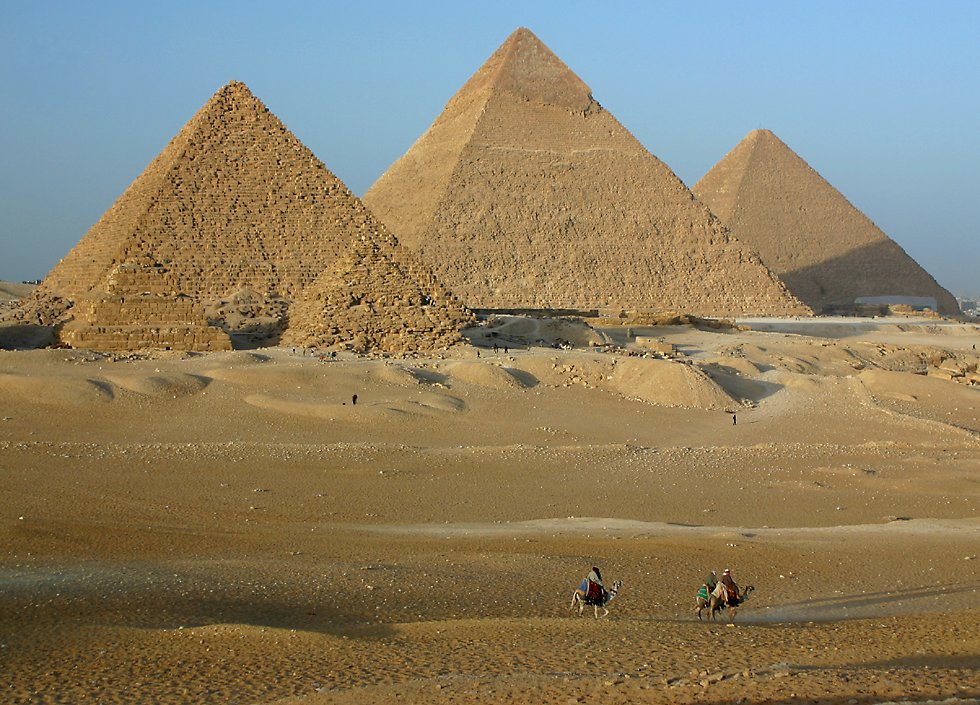
 To illuminate something means the focus of something in a piece of architecture or piece of artwork based on what we have learned in classes this week. This can be done through, color, light and shadow, or even placement in a formation, like in vignettes where certain colors can be used to highlight certain parts of a composition for effect. In Design history and theory, we learned about how the Giza pyramids in Egypt were crafted of white sandstone to make the gigantic structures stand out amongst the sands just for the corpses of kings to celebrate the afterlife. “ In other words, the pyramid was the King’s launching place, the mountain whose gilded summit would catch the first rays of the sun, from which the soul of the pharaoh would rise to greet Ra in his eternal endeavor to ensure ma’at, the never-ending rightness of all things for his living subjects below.” (Roth 201) The pyramid tombs are illuminated in the vast landscape of desert because they are an important structure to be seen and marveled, because the Egyptian culture found the afterlife to be more important than the life on earth.
 In the Webster Dictionary interpretation of idiom is a phrase whose meaning may or may not be determined by the literary definition of the phrase its self, so this means something that can not literally be interpreted The ground plan of a simple house, or pr, might stand for the word for ‘house.’ These are called ideograms. We do something similar when we use a picture of a heart to represent the word ‘love’ in this sentence ‘I love New York.’” (Marie Parsons) Egyptian hieroglyphics are the epitome of this idea because the pictures that represent words to tell a story do not always mean what they seem, a bird carved in stone does not necessarily mean ‘bird’ it might mean ‘son’. Things are not always as they seem; it all depends who translates. Egyptians would know because it is from their culture while we in this age would not know the true meaning and would have to discover it rather then just assume.
 Materials can come in many forms; most are physical and can be used to create new materials or forms. For example, if you lived in an area with a lot of one type of stone like the Egyptians with sandstone or the stone builders of Stonehenge and their “great stones”, then what else could you build your structures out of if you only have the materials around you. Of course the other thing about materials is that they can be moved and imported even to make even more forms. "Egypt is the gift of the Nile, and to understand the land, its ancient inhabitants, and the architecture they created, we must first understand the river and the geography it traverses [10.5]." (Roth 188) Roth's quotation continues to explain how an area's geography can affect the materials used in certain architectural constructions. The Nile helped Egypt to survive, it also helped to trade goods and other materials throughout the time of the pyramids and temples. In present times sustainable materials such as the Design Studio ICF wall being used in construction of “My Sister’s House” by third year Iarc Studio, are not materials used because they are found in the area, but because they a smart design wise to the construction of the structure.
 The power of three: commodity, firmness, and delight are three architectural design elements defined by Vitruvius used to create a well designed space or structure.
 Commodity, being the term used to describe something that has a purpose and fulfills that purpose, like the bicycle shed mentioned at the beginning of the class in history of theory and design, the structure does give bicycles a place to be put and keeps them dry and safe from any weather. The great Giza pyramids are also an example as they are the structures used to support the pharaohs when they die and the riches for the afterlife. That is just how they were constructed, though the Giza pyramids also share in common with the bicycle shed the element of firmness to withstand the effects of climate and weather, both are sound structures that keep their contents safe from rain or harsh desert winds. "The houses of the workers who built the dolmens, the barrows, and Stonehenge were most likely made of timbers, hides and thatch and have long since disappeared. We do have a remarkable survival of at least one village, however, dating from about 5,200 years ago and abandoned about 4,200 years ago." (Roth 174) Another example of this element of firmness resides in the neolithic stone village, Skara Brae, abandoned about one thousand years after it was built but still standing even in the present. Last but not least is the element of delight in a structure. "This is the most complex and diverse of all the components of architecture, for it involves how architecture engages all our senses, how it shapes our perception and enjoyment of (or discomfort with) our building environment." (Roth 67) Delight is also complex because our perception and senses can be complimented by many different ways whether it be color, texture, proportion, scale, rhythm, ugliness, or light. It can maybe be all the items at a time.
 All these ideas and properties covered are elements that make up or make a successful piece of architecture or art piece. Different materials such as textured brick of the Baker House or color choices and pigments on a canvas of architecture piece can lead to delight in a structure as well as the firmness and commodity if those materials are chosen to withstand the test of time and help to fulfill their purpose. Illuminating anything in design can help to draw attention to some specific item or the overall piece, completing both the commodity if the object's purpose is to be viewed and the delight because it draws people to it because of the visual pleasure. And idioms can be used to be embedded in materials (hieroglyphics) or used with materials (paints) to fulfill the commodity of telling the object's story or purpose and the delight of decorating and celebrating the object.


